Featured


Popular Content
Showing content with the highest reputation since 03/06/26 in all areas
-
The HSK 3.0 trial exam results came out today. These are my HSK6 marks: Obviously, I'm absolutely thrilled with how things turned out. I note that a 240 on the HSK6 officially corresponds to a HSK7 (source) :
 4 points
 -
I ordered the Chinese version in my February Taobao haul based on @Lu and @matteo's posts. It's quite interesting to hear about the life of a migrant worker. There were a couple of times where a package I ordered while living in China was too big for the local package delivery point/shop to hold, and I wasn't always available to accept the package. Now I feel really bad knowing that the delivery guy is paid per delivered order and makes less money if people aren't available to accept packages. The book is a series of non-sequential vignettes written by a migrant worker (Hu Anyan). He's self aware that he's nice to the point of being a pushover who doesn't always advocate enough for his own interests with employers. He tried entrepreneurship a couple of times and that mostly didn't work out either. Halfway through the book he starts mentioning how he's reading and learning to be a writer in his spare time. - This book has been a pretty big hit in China, I'm glad he now has the financial freedom to be a writer.2 points
-
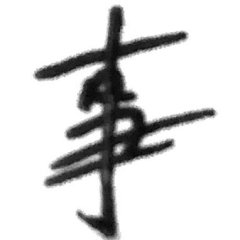
The meaning of the tattoo is correct, and the brushwork is pretty good if you ask me, though it has been done in a typically Japanese style (not particularly important, just interesting to note). The size of the characters and the oldness of the phrase will perhaps raise a few eyebrows, but that's about it id say... could be a good conversation starter, you never know!2 points
-
It would help to know about what HSK level you are at and what kind of things you usually read. But let me tell you a story that might put things into perspective. I lived in China for 7 years. Before I left I was taking advanced level classes. We were studying things such as the Analects. About two years before I was in these classes I took a look at a practice HSK 4 exam (the old one) and felt like I could pass it with just a little study. Before I left I went to the Great Wall. While I was there I met a woman from Guizhou who owned a hotel there and was in Beijing to study the hotel business there. We met in the afternoon at the Great Wall and hung out for the rest of the day. We even went to go eat together in the evening. But before we left the Great Wall I noticed a foreigner who was struggling to speak with a worker. Having experienced that situation I went over to help. Turns out she wanted to go to a certain stop around Dongzhimen but wasn't sure if the train she wanted to take was going there. So I asked the worker for her and the worker explained to me which trains to take, where and when to get off to change trains, etc. I relayed this to the foreigner and made sure she understood where she was headed and she was on her way. Now I had a plane ticket that was for a day after my passport expired. I went to the local police station to ask if that would be a problem and they told me that matter was beyond their purview and gave me a number to call regarding immigration. I called that number and spoke with the woman who answered. She very professionally yet sternly notified me that catching a flight like this was a violation of Chinese law and that if I tried to leave the country I would be detained and not allowed to leave before facing official consequences. Having been there 7 years I knew the on the ground reality. More than a few times I had been to renew my residence permit on a Friday and the worker told me I was missing a document and to get it and bring it back Monday and assured me that it wasn't a big deal and would be fine, and it always was. This is how I knew that woman was just spouting the official line. It was also mid-autumn festival, so I knew the folks at the airport didn't want ant extra work. On top of all that I was absolutely certain that Chinese people wouldn't choose to punish a foreigner who wants to leave China for good by making them stay lol. So with all that in mind I concocted a story to tell the agents at the airport when the time came. I had missed a flight before so went to the airport like a day early and happened to meet two women from Eswatini who were stranded and had no way to communicate with their family or the Chinese workers. I helped them contact their family and translated between them and the Chinese workers. When it was time for me to leave the first agent called his supervisor over when he saw my passport was expired. I was about 15% into the story I was telling the supervisor when he cut me off and said "that's enough." They had me sign a form acknowledging I broke that law, made me pay like 200 kuai (about $60) and let me be on my way. I've been back in the US for about a year and a half. I've been studying Chinese since I've been back, and I've just recently begun to be able to watch shows with just Chinese subtitles. I recently ordered a kids book series which is intended for Chinese kids 3-6 years old and I can't get through any of the stories without having to look up words I've never seen before. When I look up some of these word from these kids stories they turn out to be like HSK 5/6 sometimes 7 level! So after those advanced classes, doing all that speaking in Chinese with natives, border agents, etc, I still can't even read a children's book to completion. I'd suggest watching things like Xi Yang Yang (available on Youtube) and read books meant for children to learn. 十万个为什么 is a good series. My gf at the time in China told me if you can read one of those books all the way through you're basically good to go.2 points
-
Hello! I've been working on an online multiplayer asian word game called Danobang (大脑嘣) and am looking for beta testers to try out a new Chinese game mode I recently released. No signup is required, you can try it out directly here: https://danobang.com?game_lang=cmn You can think of the game like a more flexible version of 接龙 (word chain game). Each turn players are given a random character prompt (like "爱") and must type a word that includes it in ANY position (e.g. "可爱", "爱好", "恋爱", etc). You can submit answers with either raw pinyin or hanzi via an IME. The game is still very much a work in progress, so if you find any bugs or have any feedback please let me know! Thanks for reading ^_^ --- Some more details for those curious: - We currently support a combination of Mandarin/Cantonese and simplified/traditional game modes. If you'd like to customize gameplay further, I would recommend creating a custom room where you'll have more control over settings like difficulty, timer length, lives, cpu level, handicaps, etc. We also support HSK based difficulties! - The game's dictionaries are sourced from cc-cedict and cc-canto with some filtering applied to exclude NSFW words. This part of the game definitely needs more work (ideally we wouldn't allow proper nouns like in Scrabble and there are a handful of words we are likely missing) and I'm hoping to figure out a better system to organize things as time goes on. - The game has an "alphabet bonus" mechanic where if you collect all pinyin initials you earn an extra life! I've found this helps games feel more dynamic. - I recently added a text-to-speech feature that pronounces the prompt every turn. You can click on the speaker icon next to the bomb to toggle it on or off - The name "Danobang" has Korean origins since I originally built the game for Korean ("dano" means "word" in Korean), hence why it does not have perfect pinyin romanization of the Chinese name "大脑嘣" which came afterwards - I want to give credit to the games "Bomb Party" and "Word Bomb" for helping inspire Danobang's core gameplay. I thought the concept was very clever and wanted to adapt it for Asian languages like Korean, Japanese, and now Chinese.
2 points
-
Hello! I wanted to share a website I recently put together for to help Chinese learners read real Chinese social media posts tailored to their level of Chinese ability. It's called Mandarin Melon, you can see it here: Mandarin Melon I've found comprehensible input and extensive reading to be really helpful for learning Chinese, but it's a struggle to find enough content that is at just the right level and is still interesting to read. Resources like DuChinese, The Chairman's Bao, and graded readers are all great, but eventually you run out of interesting content at your level. I wanted more. I also wanted to be able to read more native content. However, when I tried to use Chinese social media sites directly, it was really difficult. As an intermediate learner, I wasn't understanding enough for it to count as "comprehensible" input, and it would get frustrating quickly. This is why I made Mandarin Melon. I have a collection of several million posts from Chinese social media, and I've filtered them based on the vocabulary you would know based on your HSK level. For example, if your Chinese is at HSK level 3, here is a collection of 56,000+ posts that only use characters from HSK 3 and below: HSK 3 Posts Or, if you want, you can allow it to show posts with a limited number of characters you haven't learned yet. For example, here are 200,000+ posts that use HSK 3 level characters, but allow up to 1 character to be new to you. HSK 3 plus 1 new character I've found it's a really fun way to practice Chinese. It's also a really fun way to increase my passive vocabulary, since there will be words I haven't learned yet, but comprised only of characters I already know. I find it's a really fun to practice when I'm reading social media posts. They're bite-sized pieces of content, and you get a peek into peoples lives. I also created an experience targeted at people who don't know any Chinese characters, but are interested in reading Chinese social media. It's a bit sillier, but also pretty fun, as it introduced characters based on getting you to read posts as fast as possible. You can read more about it here: Learn from scratch. The site is totally free, and I hope people get a kick out of it. Cheers!2 points
-
The XML barrier is basically a myth at this point. Just search AnkiWeb for a shared HSK deck, there are several well-maintained ones with audio, download it and you're reviewing within minutes without touching any settings. I was in the same boat after a long break and that was the path of least resistance back in.2 points
-
Finished 壮志高飞 a couple of days ago. Nothing amazing, but I wanted something that was related to aviation, which I find interesting. It's a drama based around pilots, student pilots, flight attendants and an airline. Set in Shenzhen, decent acting, likable characters. Just started 深夜食堂 “Midnight Diner”. Adaptation of a Japanese program. Set in a diner with different mini-stories and characters. First 2 episodes have been enjoyable. This was a recommendation from AI, asked for a drama set in a restaurant and was given this, it also recommended: "《我在北京等你》 (2020) – partial café/creative industry vibe", which I might try after finishing 深夜食堂.2 points
-
I've recently been watching Chinese remakes of a couple of classic Korean dramas by the acclaimed director Kim Won-seok. While neither is as good as the originals, I think they're still both better than the average cdrama and so are well worth checking out! The first is 2018's My Mister, which got a Chinese version just this year called 秋雪漫过的冬天 .The Korean original got a rating of 9.4 on 豆瓣, whereas the remake currently stands at just 6.8. This is a very close adaptation, with most scenes being one-for-one. However, the acting just lacks the subtlety of the original, plus the soundtrack isn't nearly as good. The story deals with a young woman who is heavily in debt and who has to look after her bed-ridden grandmother. She goes to work at an office where her manager is a middle aged man with a bunch of his own problems. It's not really a traditional romance between the two, it's more the two of them bonding as they deal with life. The second is called 平凡的荣耀 and is based on 2014's Misaeng (Incomplete Life). The Chinese version gets a higher 7.4 豆瓣 rating this time, although it's still way below the Korean version's score of 9.2. This one concerns an under-qualified intern at an ultra competitive international company in Shanghai and his struggles to forge a career. I can definitely recommend the Korean originals, which you can find on Netflix. They are both great dramas, even for those not interested in learning Korean. The Chinese versions are both available on YouTube. Although they pale in comparison to the originals, they are both very down-to-earth and serious dramas still worth watching.2 points
-
just finished 撒哈拉的故事 by 三毛 and I loved it! I know it's one of the "classics", but I tried and start on it a few times in the past and never made it past the first chapter - it seemed boring. Turns out tho that the first chapter is just some sort of introduction / reflections - if you push past that, her stories are really out there, crazy and adventurous, sometimes it's hard to believe they really happened. I reckon it's impossible to read the book and not be deeply fascinated, and feel a deep respect for San Mao - she just dives deep into the unknown with no fear, and her point of view is way ahead of the times.2 points
-
We are currently watching a new Taiwanese TV show called 凶宅專賣店 Haunted House Secrets on Disney+. You'll know whether it's for you or not by the end of the first episode, so definitely worth a try.2 points
-
For what it's worth, 2025 was actually our best year sales-wise since COVID - and set an all-time record for Google Play sales - so while I can't say for certain whether some other AI-powered Chinese blahblah app has eclipsed us in revenue now, by our own historical standards we're doing great.2 points
-
Hello everyone, i'm a 22y.o. student from italy, wanting to apply to the one year study program through the confucius institute. I read about the physical examination and it appears that ultrasound might be required. All my documents say "male" (passport included), been taking testosterone for almost 3 years (have beard etc), had top surgery so my chest is masculine, but i haven't got a hysterectomy as of now so i still have my reproductive organs, which would show in the ultrasound. My question is, what would entail? I already asked the confucius institute through which i'll apply for the scholarship, but i wanted to know if anyone had any actual experience on this (not hypothesis but lived experiences, whether personal or of people you know of). P.s. i'm perfectly healthy otherwise, and easily live as a man in my daily life with no problems1 point
-
I made a bookmarklet that (supposedly) will work with any browser. Check it out here: pinwean.com It lets you click a Chinese word to see the pinyin and click again to see the definition. It keeps track of the words you know and don't know. It is based of my old Slowmersion project, but I like it better because I don't have to copy and paste Chinese text into the tool. I just go to any* Chinese web page and click the bookmark. It then processes without leaving the page. * Sometimes it doesn't work on a page, for example Chinese google news, due to the page's security settings. In that case I paste the url into ProxySite.com and then click the PinWean bookmarklet.1 point
-
So, as it turns out, my wife doesn't dislike it for that reason, but rather she said the Japanese version is much better. I don't doubt that it is better, but I'm enjoying the Chinese version a lot. I don't have any intention of watching JP/KN versions, as I'm not studying those language. I highly recommend this one though, every story has been engaging and the acting is great. It's also been some of the easiest language to follow of any Chinese program I've watched.1 point
-
Thanks. It seems people are skipping the vocab study. The additional 5600 words is a lot, and is questionably beneficial (they can't all appear on the HSK7-9 exam). However, I personally don't think I will feel prepared for the HSK7-9 exam without studying the vocab in full (for HSK5 and HSK6, learning the vocab was always "step 1"). I've been grinding the the vocab recently, working backwards (I've gotten through Z, Y, X, W). I must admit, it's pretty tedious. I find I already know 50% well enough, about 30% need debugging or have room for improvement, and 20% are unfamiliar (or somewhere in this ballpark), so there are some gaps in my knowledge. I'm finding the other drawback of this approach is that it feels like I'm jumping from HSK6 to HSK9 vocab in one step. And I probably won't be able to make the May exam if I complete the vocab. The other side of the coin is: there are no more HSK words after this, so it feels "done" (well, if I really wanted to, I could also study the previous 2021-version HSK 3.0 too, and the HSK 1.0 vocab, but you get the idea---it comes with a "finish line"). And I'm aiming to use these skills beyond HSK exams, and I get enough input so that these words (as a whole) are encountered quite regularly. Still, I don't know if this is the optimal decision. Yeah, translation was a bit of a surprise addition: for years I've been learning Chinese using Chinese, believing that was the correct thing to do, and now translation is required. It's a task I'm not especially interested in. And I'm not sure if I'm meant to be literally/directly translating or not. And are the people who evaluate translations strong in both Chinese and English? I've been using DeepSeek to help with my writing too (it seems to be one of the better choices of AI). I've been posting my writing on 简书 too. I'm finding over time I need DeepSeek's help less and less (or maybe I know what it's going to say before it says it).1 point
-
The 5-minute hold after listening is standard, officially meant as buffer time to finish transcribing answers to the bubble sheet if you were writing on scratch paper as you went. Most people end up sitting idle because they answered directly on the sheet, but the format doesn't account for that. The English-only invigilation at CIs outside China is frustrating but pretty common. A lot of CI staff aren't language teachers themselves and default to English regardless of the room.1 point
-
HSK test taken, and the experience was WEIRD! Hi all, I took the HSK5 test yesterday essentially just to know what the test would be like. I had not really studied properly at all, and the result may have been about 10% to 20% depending on how well I guessed at the MCQs. I often tried to get a sense of mood even if not specific content for questions. (Summary: I'm a somewhat wasteful student, but money and opportunity cost of going to an exam are no objects to me. Plus I had passed HSK4 on 3rd attempt with my progressive mindset.) The 5及考试 had a weird aspect, whereby after the listening section was complete, 5 minutes were expected to be spent on reviewing listening and, if the student had opted not to do this it as he/she handled each question, transcribe the answer to the mark sense sheet. One student prudently asked "我们可以花那个5分时间预习阅读部分吗?“ and the invigilator said no, it was strictly pencils down. The student asked ”不过,我愿意不写,但是还可以至少看看阅读问题吗“ and the invigilator said no. So, when this time came, everyone was twiddling thumbs, wondering what to do with themselves. Everyone wanted to dot the mark sense sheet as time went by and they sure as sure didn't want to second guess their answers based on audio content that was long gone into the ether. Is this a standard HSK5 experience? I did see that one person looked at the reading anyway but the invigilator turned their page back saying they had to wait. 🧭 🧭 The other thing that was really weird was that the invigilation was all done in English. Now hear me out, I'm not a standards officer, but each of the 3 times I took the HSK4 test the mode of instruction was Chinese. This time it was all English. It was run under the auspices of the Confucius Institute. My nation does not have an official language. Even when I told the invigilator that I was a Chinese speaker there were attempts to ignore this and it was awkward as I explained this could be nipped in the bud. If I were to socialize with the invigilator in a café I would use English as the de facto language, but this was an environment where students were highly inferably adept at Chinese well beyond a baseline, and Chinese proficiency was furthermore their aim. I grant that the Confucius Institutes are no longer strongly supervised and have been left to run laissez-faire by whoever has kept the job after Beijing (essentially) offloaded them. I think this is a big deal because if CI people consider it neither their job nor civic duty to advocate for Chinese communicability, they miss an opportunity to nuture the developing generation of students. Chinese language ostracism by people who actually speak Chinese is a widespread issue, perhaps worthy of its own post (though it can get very ideological, very burn-after-reading 感觉). Anyway, I hope this feedback has proven interesting. I look forward to fielding genuine responses. Thanks all!1 point
-
Free VPNs in China are generally a short-term thing. The GFW tends to pick them up pretty quickly once they get popular, and then the service either slows to a crawl or stops connecting entirely. I tried a few before settling on SealVPN, which is paid but built specifically to hold up against active blocking. More reliable for day-to-day use.1 point
-
Any recommendations for the best VPN to use in China? I've read that many of them suddenly stop working well or get blocked. One website suggested buying 2 just in case one suddenly has problems.1 point
-
The Astrill refund situation is a real gotcha. I've been using SealVPN as a backup for when my main VPN can't connect, and it's specifically designed to hold up in restricted network environments. Not a full replacement for everything, but for basic connectivity when the GFW is being aggressive, it's worked well for me.1 point
-
Still using Anki. If you want to get fancy you can use html/css/javascript; however you do not have to. I am not a fan of monthly payments for learning apps, so for my usecase I can't recommend skritter and co. There is an anki deck that pretty much does everything skritter does for free if you don't mind tinkering a little. (https://www.skishore.me/makemeahanzi/)1 point
-
I just noticed this for the HSK7-9: The IRT model is a statistical model where students have an ability value θ on a standard distribution that represents their actual skill level. Their ability level is estimated by calculating the most likely θ that would give the student's exam results (incorporating how hard the questions are, and how other students perform), and this is then somehow (it's not explained how) converted to 0 through 100, giving the student's marks. Importantly, your mark is not your raw score: two students can get the same number of answers correct, and get different final marks depending on which questions were harder.1 point
-
Thanks everyone! I've just circled back to this chapter and I think I've managed to figure something out that works with the underlying meaning and doesn't stray too far from the grammatical meaning.1 point
-
😎 Had to listen to one of the later audio files a couple of times.
1 point
-
In case you're not aware, I'm the author of Regular Script Graphemics. I've considered doing this for over a year, but I think no matter what I do, I might piss some people off, so here's what happened. If I did things correctly, the first edition will no longer be available soon. Some people who paid for the first edition might be pissed that the second one will be free. Oh well. Don't ask me to send you the first edition while it's unavailable to buy. It's been pirated long ago so if you really want it, you can get it. Here's the plan. Large revisions. I'm pretty unsatisfied with the book. Overall explanations can be tighter. The handwriting is kind of ugly in some places. The cold calls have gotten old and what they aim to achieve can be integrated in a less disruptive manner. The writing also takes a tone that doesn't reflect my current views. Some of the hedging and speculation can be better supported. Some stuff is too long; some too short. If anyone wants to help in a substantial way, let me know. As some of you might know, I'm currently prioritizing a largely unrelated PhD and would appreciate help from someone who cares about this more than I do. If you help enough, I don't mind putting you as an author. I'll admit I haven't been reading in this area. In my defense, there's so much crap everywhere. I never feel like looking for it. People can also give feedback or suggestions in this thread. As for why it will be free, the first edition has never made enough sales to get my attention, so my goals would be better served if more people read it. That said, making it free isn't an invalid monetization strategy; some of the most successful products are freemium, but let's not get into that. For now, I'll provide some non-obnoxious method of expressing appreciation for those who want to. When it's available. I'll probably make a new thread and post a link.1 point
-
Yeah, my wife saw me watching and said she didn't like it. Lots of positive Chinese comments on Youtube where I'm watching it, though. I think it's ok, I'm on episode 5 story 3 and I like it enough. The first story, I honestly thought couldn't be improved upon, it was great, I doubt any of the others will live up to it. My biggest complaint is this insidious Pepsi product placement they have going on. And from a Chinese listening practice perspective, its definitely fine. The 老板 makes 煎饼果子 in episode 3, but yeah it doesn't seem quite localized enough.1 point
-
@Elliott Jones You can click the Export to Anki button to download a TSV file for importing into Anki.
1 point
-
@Elliott Jones Thank you for your valuable feedback! Currently, the app only includes HSK words. More entries, including traditional Chinese terms used in Taiwan, are being proofread and will be added soon. The word collection/export feature is on our roadmap and will be released shortly. Thanks again for your support!1 point
-
I like that you achieved this while sticking out even more than usual, with the whole cowboy getup. Blending in by leaning into the standing out, as it were.1 point
-
从语法上来讲,的确是指小妖怪被释放或是挣脱了执念,但是显然这个主人公他在品尝美食的欲望和感受这方面是极大程度上受到这个小妖怪的影响甚至控制,相当于小妖怪舒服了,他也就舒服了。所以虽然主语是指小妖怪,但是实际上是小妖怪和主人公一起都舒服了~ Grammatically speaking, it indeed means that the little demon was released or broke free from its obsession. However, it is obvious that this protagonist was greatly influenced and even controlled by this little demon in terms of his desire and feelings for delicious food. It's like when the little demon feels comfortable, he feels comfortable too. So although the subject is the little demon, in fact, both the little demon and the protagonist were comfortable together.1 point
-
I finally finished 走向共和 (2003, 68 episodes). It narrates the collapse of the qing dynasty leading to the republic of china. What a fascination transition it was, it must have been surreal for the people at the time. The only negative aspect of the show is that it's brutally long, otherwise it is fantastic, very well made. One thing I appreciated is that whenever I looked up a historical character online, he looked exactly the same as in the show, the casting was great.1 point
-
Hack Chinese is probably the new "cool kid" on the block. I loved it at first, but eventually found a lot of issues and stopped using it.1 point
-
It's the complement 住 in 捉住 that reads to me like he really did grab hold, however briefly; otherwise, lots of verbs can mean both to attempt or complete, like 自杀 as one well known example. Then the 又 suggests the frog is getting away from being caught. Think they have given you a ropey English version.1 point
-
You mean what 包文朴 has published? 《乐清方言词典》 《乐清方音字典》 《时间深处的名字》 《乐清谚语集》 《海澨方言》 《乐清歇后语集》1 point
-
If you are into documentaries I recommend 玄奘之路 (2011, 12 episodes). It was probably made by the same team as 河西走廊 (it's the same format), and it tells a related story: the travels of 玄奘 (the real-life monk who inspired Journey to the West's 唐僧) to India to get Buddhist scripts.1 point
-
Took a break from lessons during 2Q After 100 LTL lessons at a fast pace, I needed a break to refresh. I noticed during 2Q my control over speaking Mandarin sounds deteriorated quite fast. I picked up another big package of LTL lessons. Will go through their HSK 3+ lessons as much as possible. It is good revision and gets me speaking and listening (with words that I have forgotten) without having to split my concentration on learning completely new words. Every so often, I will also take a HSK 4 class. Of their course, repeating a HSK 4 lesson two, three or even four times isn't a problem for me - Should help really being familiar with the vocabulary. I am dabbling with a bit of Japanese - Hirigana. Not sure how that would go but the aim is to have some really basic conversations when on holiday there. With mandarin, I need to be able to converse1 point
-
Refreshing their HSK 3+ course was a good move. Definitely there’s a lot I can’t remember but there’s a lot that I do know. I tend to book when I have a free time slot. I keep an eye on what lesson I am taking but not generally bothered if it’s repeating the same lesson. I put more emphasis in having a lesson to encourage revision and regard it as another chance to practice. As expected, my reading out loud was quite poor. It has got better quite quickly though. Listening is improving. I’m more willing to stop the teacher and ask them about a specific word that they just said but which I don’t know the meaning of. Speaking is poor. I am not able to produce full sentences correctly. I tend to produce phrases which can be understood. Will have to practice speaking whole sentences derived from the lessons. At the moment, I am taking lessons an average of just under two lessons per day. This time trying to take notes down and make physical flash cards for vocabulary. Back to more traditional techniques for the basic foundations. Although I can function with getting around using Mandarin, conversations in a social setting are very difficult. I can’t get past two or three sentences.1 point
-
If you haven't already, you need to watch 潜伏 (2008, 30 episodes), a plot-driven spy story about the later years of the Chinese civil war. Superb characters and pace, hands down my favorite Chinese tv show so far. You can read more about it in this post (beware of spoilers in the later comments).1 point
-
I just finished 父母愛情 (2014, #episodes: 44). It was recommended here and I am very glad I watched it. It's a typical family drama, but the cast is great and you get a glimpse of what life was like during the second half of the 20th century.1 point
-
I just finished watching 不夠善良的我們 Imperfect Us on Netflix. Was very popular when it was released last year but I only now got the chance to watch it. Pretty good.1 point
-
Same here, working fine for me.1 point
-
I use Astrill everyday in China and have no problems with it, including from different locations, not just from home. Have you tried adjusting the mode (ie stealth), and the city?1 point
-
Astrill now is not stable in China, and be aware of their refund policy. "If our product is not working on your computer because VPN service is blocked by your ISP, we are not responsible, no refunds will be provided in such case." which means if it does not work in China, No Refund. After exchange 8 more useless emails, their guys then told the sales are final, no refund, even at the first email I request it. I lost 180 US$. I received nothing but an arrogance support team that kept dodging the issue over and over again.
1 point
-
Expanding on what @abcdefg said, I see language learning like trying to fill a bathtub with a leaky plug. The only way you will be able to fill it up is if you pour water into the bathtub faster than water is draining out. In other words, you will always have a tendency to forget what you have learned. If your rate of learning is slower than your rate of forgetting, then you will never make any progress. Of course everyone's bathtub is leaking at a different rate, but it sounds like it would be difficult to make meaningful progress at only 1 hour per week.1 point
-
Astrill is what gets the best feedback from what I hear from people. Make sure to install it before you arrive in China because obviously the site is blocked by the Great Firewall and it is troublesome (though possible via their support) to install once you are in China.1 point
-
I've been using Astrill for 5 years, phone and laptop. Sometimes need to change the server city, and toggle some different settings, but has always worked fine for me. *Edit: A friend tells me that Astrill is not good on iPhone.1 point
-
Pinwean yes. Send me a direct message.1 point
-
It is good! And Sanmao is a legend. If you happen to read the recent edition, 《撒哈拉岁月》, watch out for the story 亲爱的婆婆大人. You'll be reading along at a nice clip when you suddenly run into this one, which is suddenly much harder than the rest of the book. After that story, it gets easier again.1 point
-
The only Chinese novels I read these days are the ones recommended by our forum members here. E.g., 《草房子》 by 曹文轩 mentioned in this thread. The language is easy yet beautiful. Highly recommended to anyone who's just begun to read novels. And 《人面桃花》 by 格非 in this thread. The language is amazingly beautiful but also requires a large vocabulary and deep cultural knowledge.1 point


.thumb.jpeg.4e22723f0a5bbd0d1a7066bbcbf8c2e6.jpeg)