Blogs
Featured Entries
-

-

The Return to Kiroran
By roddy
With that spirit of sacrifice common to all members here at Chinese-forums.com, @DrWatson has provided us with pictures of the menu at Kiroran. Our correspondent writes: 葱爆羊肉 for me. What's everyone else having?- 3 comments
- 4135 views
-

Toilet instructions
By abcdefg
One sees this sign, usually only in Chinese, in the male toilets of lots of public places. The English translation here is particularly lame.- 10 comments
- 5486 views
-
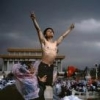
Toilet Etiquette
By somethingfunny
In some places this kind of thing could get you into a lot of trouble. So, what do we think of the calligraphy on show here?- 4 comments
- 34826 views
-

Week 7 - 听写又来了!
By js6426
Well I guess I mistook which week we are in, because apparently this is week 7! I didn't update the blog last week as we had the week off, which was actually really nice and relaxing. Anyway, things are continuing to go well as we start back up after our week off. Still a fair amount of students not coming to class. Week 9/10 is our mid terms, and it is doubtful whether or not some of the students will be able to sit the exams, as they may not have been to enough classes. If the- 2 comments
- 5006 views
Our community blogs
-
Latest Entry
大学毕业
Hey guys, sorry it’s been so long since I did an update.
I graduated successfully with a 92 average, which was number one, but honestly it basically feels meaningless. My final thesis was on the 3 body problem.
Doing the final year and a half online was a disaster, and my Chinese went downhill massively - thanks covid.
All the student had to speak, which meant we got about 3 minutes per class to actually use Chinese. Time differences also made it challenging.
Glad that I graduated of course. I guess the question is, would I recommend this degree to anyone else? Probably not, but it depends on what you want to get out of it. My classmates were all young and were basically there to party and end up with a degree, I was there to learn Chinese. In person was better by far. Also important to recognize it was a Chinese language and literature degree. Classes on Chinese mythology were a waste of time for what I wanted, and my time would have been better used doing self study on stuff I would actually use.
I also really struggled with being treated like a child - things like having attendance taken at every lecture. In England you can attend lectures if you want, but exam results are what matter. If you fail then that’s on you, if you can pass without attending class then it’s all good, but that just wasn’t an option for us in China, to the point where you wouldn’t get a visa if you missed a certain amount of classes.
I’m glad I did it as I learnt a lot, but if I could go back in time I probably wouldn’t have bothered.
-

- 0
entries - 0
comments - 2625
views
No blog entries yet
- 0
-

- 6
entries - 18
comments - 6560
views
Recent Entries
 Latest Entry
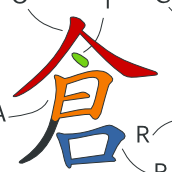
Inputting 2-Unit Characters
Two-unit characters are characters that can be divided into two units based on the shape of a character. This can be a division based on left-to-right, top-to-bottom, or outer-to-inner. If you are familiar with radicals then the concept is not so alien. For left-to-right often a spacing, or lack of connecting from the left side of the character to the right side of the character, is where the the character is divided up into two units. For top-to-bottom it can be more tricky, but again if you think back to character radicals it is not a leap. For outer to inner, there is an outer shell unit that encompasses the inner unit.
Once the character is divided up into two units, the following rules apply for determining the Cangjie input code:
1) The first unit may only have up to two Cangjie symbols input. If there are more than two symbols in the unit, then only the first and last Cangjie symbols are input on the keyboard.
2) The second unit may have up to three Cangjie symbols input. Again, if there are more than three, some skipping is involved. In this case, the first, second and last Cangjie symbols are input on the keyboard.
This may seem a bit abstruse, so let's look at some examples. Unfortunately I am on my android device right now and I don't yet have a very good Cangjie input method tool, so I'm still looking for a better way to bring up just the Cangjie symbol to show how things are built up. As such, to make sense of the following I suppose you need some familiarity with Cangjie symbols. I will try to update this post later if I can figure it out.
1) 風 / 风
A quick visual examination yields a clear outer-to-inner relationship in both the traditional form and simplified form of the character. The outer unit is 几, which can be made up using Cangjie codes that look like 厂乙 (note these are radicals on don't reflect the exact Cangjie symbols, but I wanted to provide something to help see how the unit is broken down to Cangejie symbols. To build the unit, the input code is HN for the outer unit. The inner unit looks like 虫 with a "hat" on top. This unit requires four symbols, so we have to skip the third, with the Cangjie code being HLI. The resulting Cangjie code for the entire character is HNHLI.
For the simplified character it is similar. The first unit is HN still, but the innter unit is simplified. It turns out that this unit actually represents a Cangjie symbol, so the Cangjie code for this unit is just K. Putting it all together, the resulting code for the entire character is HNK.
2) 鍾 / 锺
Upon visual inspect, this character is a left-to-right two-unit character. The first unit is 金 or钅, and the second unit is 重. Well, 金 is actually a Cangjie symbol, so for both the traditional and simplified forms, the input code for the first unit is C, and that completes the unit. The second unit, however, has four Cangjie symbols in it, so we have to skip the third since we are only allowed up to three symbols. The unit is made of a "hat" stroke on the top, 十 just below it, then skipping 田 because it is the third symbol, and finally 土. This turns out to HJG, and thus the entire code for this character is CHJG.
3) 規 / 规
Again, this is a left-to-right two-unit character. Based on the Cangjie symbols, the left side is built with the codes QO. For the right side, the code comes out to BUU for the tradtional. For the simplified, it is BHU. Again, I wish I could input just these Cangjie symbols for reference, but this one is proving challenging for my Android input method. The final code is QOBUU for the tradtional version,a nd QOBHU for the simplified version.
Well, that is it for today, looking back at this post I am not even sure if it is useful. But oh well, this is kind of my journal too. When I am back on a real computer I will see what I can do.
- 6
-
- 6
entries - 68
comments - 915834
views
Recent Entries
 Latest Entry
New semester and 'respected' professors
Haven't really had a chance to update since the new term began, I had my thesis proposal in early September which felt like more of a defense than a proposal. Out of my panel only one of the professors could really ask me questions because the other two didn't have a background in cognitive linguistics and didn't really understand my topic. So I spent 20 minutes of defending my topic with this one professor (Actually my old Consecutive interpreting professor) who began with "honestly this just feels like an idea on paper" ... ummm.... yes.. thats what a proposal is lmfao. but I continued to humor her and stand by my topic. It was rough, actually the entire classroom went through this slurry of vicious attacks toward our topics that if you were unable to defend yourself you would just be stuck standing there listening to them shit on you for 20 minutes. The hardest part was that everyone had to stay in the room so it was roughly 4 hours of listening to each student present and defend themselves. But I survived and my proposal passed somehow even though one of the panel told me that she felt that my topic was really interesting but just not for me.
This term I only have 4 classes. Written translation on Mondays, And 2 simultaneous interpreting courses on Friday. Our Tuesday classes (4 hours) began sometime after the holidays and every week since then has been a mental torture. The original teacher for the class "cross-cultural communications" was supposed to be an interesting guy from Australia. Unfortunately this guy is under Confucius scholarship studying his Phd and cant continue his teaching so we got stuck with the same guy who taught us last semester in 4 hour brackets.
Yes... that professor. I don't like to judge but this class should just be renamed "My musings" because every class has just been about him rambling off things from his mind for four hours. Nothing he says has anything to do with the class or to anything even remotely useful. It actually feels like he's just trolling the class, because I don't understand how someone can talk about an ant and tiger analogy for four hours straight. I think the worst part of this class is that his musings always lead to something totally inappropriate. So something extremely racist or sexist, or homophobic crosses his mind and he just goes on and on and it really hurts me to hear that so many of my classmates find this "PHD" so interesting, when he would literally be crucified in my country for the things hes said. I don't know how someone like him has studied in America. I've been bringing my study materials and books to read in class so that I don't have to listen to that garbage that he says, but you know its really hard to block out something so completely inappropriate.
But other than his inappropriateness his classes are just a waste of time. I'm not even kidding when I say that I had to listen to him talk about colors yesterday. He started from Red and ended on Gray and then looked at the time and we had about 20 minutes left of class and he mused "what other colors have i missed? Oh yeah Brown!".
The Monday translation professor is a close second to a professor I have no respect for this term. This lady prepares nothing for class. Her classes are prepared by a different classmate each week. And I'm not talking about just a short presentation. No. I'm talking about a full class, including creating group work exercises etc. She does nothing. What she does is sit there and when shes given the remainder of the class to add anything (roughly 20 minutes) her response is "well what am I supposed to do?" ...... um. Teach. That's what you get paid for . That's your job. In the very beginning of the term the professor wasn't clear she wanted us to basically teach the class every week so in week 2 when we came to class this lady had some nerve to criticize us all for being irresponsible and unprepared for class. She does this from time to time when people are late. I'm legit rolling my eyes in that class every week.
The only class worth mentioning is our simultaneous interpreting classes held on Fridays. The classes have been really difficult but really good for exercise. The only qualm I have is that I have my recordings played every class for both sections, so every week I have to hear my lousy interpretations twice in the same day (from E-C and C-E) its rough but I've gotten so used to it that Its kind of like meh whatever to me. Though its kind of irritating that its always the same people played every week. I haven't heard half of my classmates in that class even once.
So other than classes what have I been up to? Its a semester that leaves a lot open. I've been trying to work on honing my interpreting skills, especially in simultaneous interpreting which I find to be quite challenging. My professor suggested shadowing for about 10-15 minutes a day to get used to keeping up with the pace. A problem that many of us have with simultaneous is waiting too long to begin, and only speaking in 3 word clusters instead of having a fluid sentence. I've been shadowing with this program 《绝密档案》 from the app 蜻蜓。 The app itself has a lot of different podcasts to choose from to listen. I just find this program particularly interesting so after 15 mins of shadowing I just continue listening to the rest of the story. I've also made use of going over some of my old resources that we had from past classes so Ive been going over speeches that have Chinese and English to work on a more formal register and also to get a feel for collocations.
I wanted to work this semester but I think that with the thesis and everything I'd rather just focus on my studies this term. Its sad to be without the extra cash but I have my whole life to make money but just this year to really work on my studies. I've still been keeping my eyes on jobs because I'd like to find a job after my studies and stay here for another year. As much as China kills me at times, I'm not ready to leave.
That's it. Our first draft of our thesis is expected to be ready by December for our pre-defense. The date hasn't been confirmed yet but we've been told already we should have a minimum of 19,000 written. I still need to set my study up and get a move on it. I'll try and keep this blog up to date!
- 6
-
- 0
entries - 0
comments - 2395
views
No blog entries yet
- 0
-
- 0
entries - 0
comments - 3411
views
No blog entries yet
- 0
-
- 6
entries - 0
comments - 1395373
views
Recent Entries
- 6
-
 Latest Entry
十月十四号
我很失望。
七月十四号我开始新的日记只用汉语。
到七月十五,我停了!
我停了为了集中提高我的听力。[See Note 1]
从今天我会集中写句子因为。
我很难写对法语的句子。[See Note 2]
这使得说汉语很难。[See Note 3]
我先提高我汉语写的能力然后我提高我的口语能力。
Note 1: Can I use 了 here? I've been told I need to use 下 but not sure why.
Note 2: Trying to say "I find it very hard to write grammatically correct sentences."
Note 3: Trying to say "This makes speaking Hanyu very difficult."
我正在看《如若巴黎不快乐》。
我觉得不很好中国戏剧。
为什么在中国戏剧主要男的演员常常逼女人做不想做的东西?
女人说“不,不,不” 可是男人还逼她。
在英国,观众会抱怨。Sorry for my poor writing!!!!
-
 Latest Entry
Occupation affix particles in Chinese
In most of the world's languages, you can turn a word into its respective occupation by adding affixes to it. However, as Chinese doesn't conjugate, we attach an additional character to a word instead to form that corresponding job. One aspect in which Chinese differs from English when forming occupation words is that in English, what suffix is used depends mainly on the origins of words, but in Chinese people choose occupation particles based on the properties and characteristics of that job. Here're some practically and frequently used occupation particles in Chinese.
1.家
家, with its original meaning of a family or a clan, can be extended to refer to a particular philosophy, theory or ideology. Hence, when it's used to form an occupation word, that occupation would be usually related to a professional skill, interest or talent. For example:
-文学家: a person who has been educated on literature — a litterateur.
-画家: a person who is professional in drawing — a painter.
-科学家: a person who has professional knowledge about science — a scientist.
-音乐家: a person who is well-educated and professional in music — a musician.
-美食家: a person who is passionate and authoritative in appraising foods — a gourmet.
It's good to note that when two different occupation words are derived from the same origin, the one with 家 added often has a higher level of profession, authority or recognisation. For instance, 歌手 and 歌唱家 are both people who take singing as their jobs, but 歌唱家 is definitely regarded as an artist while 歌手 is probably just a public performer or a pop song singer.
Another interesting fact is that when we come to players for specific musical instruments, the only two that are conventionally named with 家 are 钢琴家, a pianist and 小提琴家, a violinist.
2.师
师 originally means a teacher or an adviser. When a job is named with 师 attached, it refers to people who are well-trained or experienced in a particular area. The difference between it and 家 is that a 师 may not necessarily have the profession or talent. Here're some examples:
-教师: a person who is trained to teach others — a teacher.
-厨师: a person who is trained to work in a kitchen — a cook.
-理发师: a person who is trained to manage people's hair — a barber.
-会计师: a person who is trained to account money — an accountant.
3.手
手 means hands, thus referring to people who have high skills or talents, but only in a small area. Unlike 家, a XX手 usually doesn't have an overall profession in a general field, but in a much more specific section. It is very often seen in players of a particular instrument. For example:
-鼓手: a person whose task is to play the drums — a drummer.
-吉他手: a person who plays the guitar — a guitarist.-小号手: a person who plays the trumpet — a trumpeter.
-舵手: a person who is responsible for managing and controlling the helm — a helmsman.
4.工
工 means originally work or labour. Hence it is usually used to name those jobs that need hard labour or manual processes. For example:
-技工: a person hired to manage technical issues — a technician.
-水管工: a person paid to repair waterpipes — plumber.
-电工: a person paid to check and fix electrical devices — an electrician.
-油漆工: a person who paints buildings — a painter.
5.匠
匠 basically means a craftsman, so it is used for any job related to crafting and designing. Though it also involves laborious processes often, it's different from 工 as the labour is done in order to craft or make a certain object or artefact. For example:
-木匠: a person who uses woods to do handicrafts — a carpenter.
-铁匠: a person who crafts metal objects — a blacksmith.
-
- 22
entries - 6
comments - 1381975
views
Recent Entries
 Latest Entry
We made a club on Clubhouse
Here's the link to our club: https://www.joinclubhouse.com/club/芝加哥汉语聊天社. Anyone on Clubhouse can follow our club.
Our regular meeting is now on Saturday evenings at 7 pm CST. If you want to become a member, please attend a meeting and ask to be added as a member. Membership gives you the right to open a room on behalf of the club, which will automatically notify all other members of the club. It possibly notifies followers as well, but I'm not sure about that.
- 22


