Featured



Popular Content
Showing content with the highest reputation since 04/06/25 in all areas
-
I had modest aims from day one and I have achieved them. My primary goal was to become fluent in daily speech, to be able to function at a high level while living in China. I made extra effort to master the specialized vocabulary of activities in which I was particularly interested. With that in mind, I learned lots of food and cooking vocab. Menu vocab was an outgrowth of that. I was always the guy who would stand up and make a point of taking snapshots of the hand-written menu written on the wall of small, no-front-door, mom-and-pop cafes. Eventually I studied tea at a professional level and had to learn how to talk about it with other "tea people." Living in China, my language was exclusively Chinese, every day, all the time. With my friends and daily contacts, it was all Chinese, all the time. If someone didn't understand me, I rephrased it in Chinese. Now, I am no longer living in China and am no longer studying Chinese. Use it occasionally, but only in simple and casual interactions. Sometimes watch a Chinese movie or YouTube video. Fluency has been disappearing at the speed of light. Since I don't expect to ever be able to return to China, I'm not struggling to retain those language skills. This forum has always been an important and helpful learning tool. I am grateful to everyone who has had a hand in maintaining it and contributing to it. Thank you!9 points
-
I teach Mandarin at a university in the UK. I had studied Chinese pretty intensely for 13 years when I was asked to work alongside a native speaker on the course, for the very reasons you said (avoiding common pitfalls). I field grammar questions all day every day when students are out of 'native speaker class', as there are many, many conceptual issues that just don't click easily when explained by a native speaker. I usually pass them over to the native speaker teaching team after 2 years in the mixed environment. I myself learned this way, with Esther Tyldsley being my first teacher and then working through the excellent John Pasden Chinesepod classes for years. I continue to take the latter as a guide and benchmark for how we teach the language here at Bath. Hope this helps, we need more non-native people in the space, even if it's just to change the narrative of how Chinese is taught by native speakers.8 points
-
For what it's worth, 2025 was actually our best year sales-wise since COVID - and set an all-time record for Google Play sales - so while I can't say for certain whether some other AI-powered Chinese blahblah app has eclipsed us in revenue now, by our own historical standards we're doing great.7 points
-
Hello all, I'm a long time lurker first time poster. I first came across this forum about 10 years ago when I was barely HSK 4 level, and it's great to see that it's still going strong. Books 1 (国债期货交易实务) and 3 (从零开始读懂统计学) were from back when I was trying (and failing) to complete a master's degree in finance taught in Chinese. I got started with Yuhua's books based on recommendations in this forum. 2 (活着) needs no introduction. 4. (我只知道人是什么) is a great non-fiction essay collection by Yuhua. He also wrote about how he worked really hard to write 活着 as simply as possible, so I felt a little less pride about successfully reading that fiction book. 5 (许三观卖血记) was an incredibly sad and impactful book, I felt more emotions than I ever did reading an English book. 6 (乌合之众) I asked ChatGPT for non-fiction book recommendations and it recommended this psychology of crowds book. I got several pages in before I realized it's from the late 1800s (translated from French). It's fairly popular in China now and the podcaster 纵横四海 talked about it. It's harder to understand than most non-fiction books. 7 (力量从哪里来) was mentioned in this forum. It's sort of a self-help/autobiography book from a former McKinsey partner who later led The Gates Foundation in China and founded a school. She's a mom of three and has a 'you can do it too' vibe. I enjoyed it. Books 8 (认知觉醒) and 10 (把时间当作朋友) are pretty readable self-help books. The latter of which is actually a collection of blog posts mashed into a book. There's nothing life changing if you've read a bunch of self-help books in English, but I still recommend them. Book 9 (我曾走在崩溃的边缘) is excellent. The author Yu Minhong founded the largest english language learning company in China, and he tells his life story from practicing English while sick in a hospital to eventually listing his company on the New York Stock Exchange. --- I plan to continue getting reps in with non fiction books before turning my attention back to (the much more difficult) fiction books. Happy to hear recommendations from all of you. Title Author Pages 1 国债期货交易实务 戎志平 310 2 活着 余华 201 3 从零开始读懂统计学 李慧泉 168 4 我只知道人是什么 余华 259 5 许三观卖血记 余华 286 6 乌合之众 古古斯塔夫-勒庞 191 7 力量从哪里来 李一诺 326 8 认知觉醒 周岭 257 9 我曾走在崩溃的边缘 俞敏洪 376 10 把时间当作朋友 李笑来 3317 points
-
@abcdefg You have ALWAYS been much more than you too easily summarized in your post... I know I'm not the only one who measured everything I wanted to do with Chinese against what you DID do with Chinese... I'm the guy who wanted to eat and drink what you prepared and brewed because I couldn't do it for myself... I'm the guy who envied all the friendships and relationships casually recounted over the long years you taught me about how to live in China, while I could only prowl other countries and other regions... And I'm the guy who's gonna hope you're still gonna make all that experience available here for a long time to come... My wife's a kickboxer, so we both better hope she don't hear about this "man-crush", but... Just sayin' "Thanks for everything..." TBZ7 points
-
In his ABC Etymological Dictionary of Old Chinese, Schuessler provides a very interesting discussion of what he calls extrovert (causative, action originates from the subject and is directed towards an external object) and introvert (action directed towards the subject) character pairs. These pairs could also be understood as causative derivations, or in some cases transitive/intransitive and/or active/passive pairs. Sometimes the characters are differentiated by tone alone, but in other cases the pairs consist of two separate characters, in some cases the pair in question is easily missed as a result. I have often noticed that pronunciations of related semantic ideas are often close or homophonous; Schuessler expands on this with his examples and it is quite fascinating. The list below includes just a selection of examples, some of which may be familiar and others I had never even considered before, the list in the Dictionary is far longer and more comprehensive: 買 mai3 to buy 賣 mai4 to give someone something to buy > to sell 受 shou4 to receive 授 shou4 to give 聞 wen2 to hear about/be heard about 問 wen4 to ask about 取 qu3 to take 娶 qu3 to take a wife 好 hao3 be good 好 hao4 treat sth/sb as good > to love 視 shi4 to look at 示 shi4 to make someone look at > to show 右 you4 be to the right 佑 you4 to support, assist someone 惡 e4 be evil 惡 wu4 treat as bad > to hate 中 zhong1 be in the centre 中 zhong4 hit the centre > attain 北 bei3 north 背 bei4 that which is turned north > the back 内 nei4 what is entered > inside 納 na4 to bring inside 之 zhi1 to go 志 zhi4 what is gone to > goal, purpose 畏 wei4 to fear, be afraid > be made frightened 威 wei1 to overawe, frighten 登 deng1 to rise, ascend 等 deng3 'step of stairs' > that which rises 當 dang1 be equal to 黨 dang3 equal in rank > party, category 教 jiao4 set an example > teach 效 xiao4 imitate, follow an example 覺 jue2 to wake up, get insight 學 xue2 to learn6 points
-
Something seems to have gone severely wrong with a recent automated upgrade and it basically scrambled all of the JavaScript files relating to making posts, so that it was impossible to post anything. After unsuccessfully trying to revert to the old files (which Invision irritatingly unpacks from an XML file but was refusing to unpack from a fixed version of that file) I ended up deciding to just restore the whole thing from a backup instead - this unfortunately means that a day or so of posts have been lost, but as I'm currently traveling and it would take several days before I'd be in a position to fix it some other way, that seemed like the least bad option. I've switched the server to daily instead of weekly backups now, so if this happens again and this solution is necessary again, it should mean less lost data. Very sorry for the hassle.6 points
-
Sorry for long post, I think I last posted here in 2023 🙂 I graduated from my Chinese BA last year and have been struggling to keep up the reading habit since (struggled to keep it up ON the degree at points, as it just wasn't a skill that was encouraged or normalised as part of the course). After finishing my degree, I read: 沉重的翅膀 by 张洁 寒梅 Han Mei's bio of Li Qingzhao 李清照传 (Enjoyed this! Great intro to a lot of vocab specific to Imperial China, and some interesting Song daily life stuff) 小时代1 Tiny Times 1 by Guo Jingming 郭敬明 (Some of the writing was actually quite pretty but the drama aspect was tedious) 散文集 Sanwen by Bing Xin 冰心 (I recommend for beginners! Her writing style is very approachable - lots done for children but with literary value - and the sanwen format means you can just read one piece at a time to feel accomplished) 林语堂 Lin Yutang's bio of Wu Zetian 武则天传 (relatively lucid style but with tricky vocab and quite a few classicisms mixed in, at my stage still very difficult to follow all the different people at court at once.) I'd love to be able to use resources like the biographies to efficiently 'read to learn' about Chinese history and culture rather than just to learn new words - especially when it comes to connecting stuff across different books etc - but think I'm fairly far off doing it comfortably because I'm still putting so much effort into comprehension. Sad because it's my priority for language learning atm - I don't speak Mandarin at my grad job but I do write political/cultural commentary for a few publications, so it would be an asset to me, and to them, if I could get through Chinese non-fiction very quickly for research purposes. This takes me to 33 books in Chinese overall, which sounds like a lot but actually isn't (a VERY crude estimate puts it at between 5 and 7 million characters). I feel almost exactly the same as Imron did here in 2011 after 32 books, which is a comforting sign! (ie. there might possibly be nothing wrong with me, haha). My strategy for most of the books I've read has been to deliberately search for new vocab, ie. I'd tell myself I would read every day for as long as it took to spot a certain number of unknown words. This was really useful as it took the intimidation away from 'hard books' and meant I got enough immersion by default to reach a relatively comfortable speed/comprehension level (still nowhere near native, but definitely beyond what was expected of me as a native speaker of a European language). But obviously native readers aren't hyperfixating on vocabulary, and at some point you need to transition away into intrinsic motivation. I currently want to just focus on FUN and PLOT until I reach the 50-book milestone (within the next 8 months, I hope!) and then go serious/literary/nonfic again once I've built up even more speed, comprehension and endurance. So I'm going through a load of thrillers I found in Douban's 悬疑 tag and am looking for other stuff that is plot over language (ideally originally written in Chinese so I get the cultural aspect too). It would also be super cool if I could find plot-heavy fiction set in Imperial China to make it easier to adapt to general-reader history books afterwards. I would like to know how it feels to stay up all night reading a Chinese book, not because it's a goal but because I am hooked by the story... currently 10% through 潜梦者 by 陈猛 and genuinely enjoying it!! Other items of interest re. Chinese reading: My comprehension definitely did improve after doing spaced-repetition drills for a list of the most common chengyu - I made my own from a mix of HSK and frequency lists and used Memrise for testing, although I think Pleco would be better suited as software. I stopped doing this around December after about 2 months of daily practice but am still seeing benefits in my reading now. In English, I love reading trashy showbiz biographies - where would you look to find these in Chinese? I suspect they'd be more of a thing in Taiwan but would happily switch back to 繁体字 if the gossip is good enough...6 points
-
just finished 撒哈拉的故事 by 三毛 and I loved it! I know it's one of the "classics", but I tried and start on it a few times in the past and never made it past the first chapter - it seemed boring. Turns out tho that the first chapter is just some sort of introduction / reflections - if you push past that, her stories are really out there, crazy and adventurous, sometimes it's hard to believe they really happened. I reckon it's impossible to read the book and not be deeply fascinated, and feel a deep respect for San Mao - she just dives deep into the unknown with no fear, and her point of view is way ahead of the times.5 points
-
One year in Kunming I had a one-on-one pronunciation tutor who came to my apartment three times a week to help me sound "more native." I already knew the basics, had been studying several years. She was an out-of-work opera singer, who usually toured small towns with a family troupe. Chinese opera mainly, with a few Western hits (not full roles) as well. The troupe had hit some sort of financial obstacle, which she hoped would be temporary. She said she didn't want to look for "a real job," so she responded to my ad. She didn't speak English, which was fine with me. I cannot sing at all, in any language, never could, but we did drills in which I would mimic the diction of famous orators. She would find them on-line at home. Some even had videos, and I would then mimic the gestures as well. Would have felt silly doing that in a class, but at home with only the two of us, I could let myself go. She wanted me to memorize these speeches and say them over and over when I was on my own as "homework." I did it. She would help me with the rough spots. We spent a lot of time on emphasis and phrasing. Not just making the right sounds, but how the sounds hung together into a proper sentence with proper rhythm, how it all "flowed." Eventually, we started using some speeches that had even been set to music. We also branched out into a few poems. It was impossible to sound like a boring, monotone American when reciting this stuff. (That had been my baseline.) All in all, it was an unconventional learning experience. It helped my pronunciation, but I'm sure my neighbors thought I was nuts. She insisted I use full voice, not a whisper. My local Chinese friends found the assignments amusing when I "showed off" for them. I didn't do it often. My favorite was a flowery oration by Mao Zedong.5 points
-
I've been a member here for 21 years. A new born baby joining the forum the day I did, could have graduated with a degree in Chinese from a Chinese university by now... What will I do this year to improve my Chinese? I'll watch more short vids of repurposed Chinese created content that gets transferred to instagram and ends up in my feed. I never did get round to taking further HSK exams, I'll just do them with my daughter, when she gets round to doing them. When I joined, Pleco on the Palm was simply amazing, I showed it to everyone. China simply didn't have that sort of technology. Back then a lot of the talk on the forum was about purchasing calling cards to use landlines to call home. Now for students of Chinese you have to know about why everyone is doing a particular dance trend on their short vids.5 points
-
I am in my late 40s and have been self-studying Chinese on-and-off for 5 years now. You may remember my TCB marathon among other endeavours. I only recently noticed how mentally taxing it is. I used to wake up early to study 1-1.5 hours before work and in the last 1-2 years I have been at the verge of a burnout at work. Also, the study time was not very productive. I focus mainly on listening to native content now and I would have difficulty concentrating. It was only a couple of months ago that I decided to stop studying Chinese and instead focus on input-free rest that my mood and my concentration improved. Work is much more fun now and quite frankly I do a better job. Now, I exclusively study on weekends, but only if I feel completely rested. Rest is my priority. I just started listening to native YT (Germany's Deutsche Welle in Chinese) and noticed how much more efficient this is now. Even though I may only do around 2 hours of listening per week, I feel this is more productive and sustainable. Anyone had similar experiences regarding mental load?5 points
-
I'm about to start my 9th year of serious Chinese study (I guess it's my 10th overall). Unlike many other people on here, I have never been to China. Most of my eggs have gone into the "reading and listening" basket. My speaking and writing are at "survival" levels, meaning that I can usually communicate whatever thought I need to get across to people, and they understand me (my pronunciation and tones are quite good, though of course I speak with an American accent), but my grammar, style, and syntax are very rough. I tend to phrase things in awkward ways. I sometimes hear, "Oh, I understand what you're trying to say, but that's not the way we normally say that." But I have a lot of fun reading stuff in Chinese (depending on how easy a text is, I can sometimes read a few pages without encountering an unknown word, and my reading is growing more fast and fluid), and my listening comprehension is good enough for following Chinese podcasts and YouTube videos. Even if I don't go to China and immerse myself in the language so as to become a fluent speaker, I still have a lot of opportunity to grow my listening comprehension here in my home country. It's a fun hobby that gets more fun as I get better at it, and it's really great when I occasionally encounter an actual speaker of the language. So I'd say I'm satisfied, though my next goal is to grow my listening skills to be closer to the level of my reading skills.5 points
-
FWIW, maybe not a perfect metric since it's also tied to stuff like currency conversion but Pleco sales are up by around 15% versus last year, with no major new releases driving that - we're back to our pre-COVID sales levels now.5 points
-
@lordsuso I see what you mean but I feel like those are quite shallow kinds of soft power. Tiktok is owned by a Chinese company but any positive feeling for it is largely divorced from that. Most big game aren't Chinese. The Wukong game is the first one that seems to have broken through. The doll thing, again, is recent. It may represent a sea change. But up until very very recently there was simply no widespread popular regard for Chinese contemporary cultural exports in the way there is for Korean and Japanese stuff. China's had a boost within basically the last year I think because of the Tiktok ban, the brief exodus to Rednote, and some people discovering the more developed areas of China and contrasting it to the US. But I just don't think they're going to be long lasting unless China has some more deliberate policies to promote themselves. Maybe they do, but it certainly doesn't seem like it. I know Korea and Japan have real government weight behind their culture industries with an eye on foreign markets and tourism. China's promoting tourism but they still don't have a 'brand' in the way Korea and Japan do. And I judge that from the fact that even people I know who have no interest in East Asia know Japan is the "cute" place, and Korea has "K-pop." We're still waiting on a positive Chinese national brand/iconic export. At least in my opinion. A large part of that is probably the lack of a connected online culture. This just occurred to me but for example, a big part of catapulting K-pop into the global mainstream was the Gangnam Style video back in like 2012. That happened because despite the language and distance barrier, most of the world shares social media sites like YouTube and Facebook. Even if China does produce their own 'Gangnam Style' it's unlikely to go global because their internet ecosystem is deliberately national and not global (TikTok is a perfect example, with Douyin being their national version, deliberately segregating Chinese and global users). Granted, the net has become even more global since then and Chinese influencers are making headway, we're all seeing translated shorts now. But the systemic barriers are much greater for them than there are for others. A lot of this stuff is about maximising the chances by creating organic opportunities for humans to connect, and I think the Chinese system, albeit inadvertently, stifles that. The point being I guess that it's all relative and they still seem to be substantially behind where we might expect them to be compared to their neighbours. But maybe our expectations are unfair, too! In absolute terms obviously they have decent soft power compared to the vast majority of countries which remain obscure on the global stage.5 points
-
The HSK 3.0 trial exam results came out today. These are my HSK6 marks: Obviously, I'm absolutely thrilled with how things turned out. I note that a 240 on the HSK6 officially corresponds to a HSK7 (source) :
 4 points
 -
I’ve actually had pretty good results using AI for spoken Chinese. I don’t use it as a “teacher”, but I'm using it to design structured speaking routines. For context, I’m upper-intermediate and live in China, so my main goal is conversational fluency. I told AI what I thought I needed to improve in my speaking, which is mainly to "keep going" and not correct myself or worry about grammar. I asked AI to build a daily spoken fluency routine tailored to that, and after running it consistently over multiple stretches, it’s been one of the most effective things I’ve done for speaking. The routine is simple (20–30 minutes): Short warm-up free speaking, just repeating sentence starters (e.g., 最近我发现…, 我最近在想…) Shadowing Quick, easy sentences Expand one topic and really push depth (reasons, examples, comparisons) A “keep talking” reflex drill — no stopping, just rephrase and continue A short real-life simulation (explain something like you would to a friend) **I've attached my current detailed routine on a PDF below I think this helps builds automaticity. Helps me stop waiting for perfect grammar and start developing the reflex to just speak, which is exactly what real conversations need. I’ve been doing this routine for around two months and have seen carryover into daily life. Even when I stop the routine temporarily (like during CNY travel), the fluency gains seem to have stuck. For me, the real strength of AI isn’t that it replaces learning, but rather it can generate highly personalized, structured drills/content on demand. Based on my feedback after completing the routine, it has updated it several times over the past two months and it will continue to evolve as I give feedback. I think it's powerful tool, especially for intermediate+ learners. Another example I use AI regularly for is: I tell it about situations I run into in my daily life and have it write it out as a story in Chinese. You can't get this from any textbook. Speaking fluency routine.pdf4 points
-
Just finished reading another self help book, 认知驱动, which was written by 周岭. I low key think my brain is turning to mush from too many self help books, but they really are some of the easiest to understand non-fiction books. I'm going to switch things up and read either 我没有自己的名字 (Yuhua) or 我们三 (杨绛) next. I do have Hu Anyan's 我在北京送快递 and a few other books soon to be delivered from taobao.4 points
-
I finally finished 走向共和 (2003, 68 episodes). It narrates the collapse of the qing dynasty leading to the republic of china. What a fascination transition it was, it must have been surreal for the people at the time. The only negative aspect of the show is that it's brutally long, otherwise it is fantastic, very well made. One thing I appreciated is that whenever I looked up a historical character online, he looked exactly the same as in the show, the casting was great.4 points
-
Oh I'm reading it as well, it's really interesting - at times even eye-opening - if maybe a bit monotonous. It's really more a diary or a documentary rather than a novel, recommended in simplified as the prose is simple and easy to understand.4 points
-
My experience is that this can work, though, if the two languages are as far apart as French and Chinese and you are at different stages of learning in each one. For years I have been working on both Spanish and Chinese and this is not any kind of problem for me, as my Spanish has always been further along and I am not just studying vocabulary in either language. In Spanish I listen to podcasts and watch telenovelas and in Chinese I am still doing graded readers. They don't interfere with each other any more than me both running and swimming.4 points
-
I've often wondered about this question. My entire social life when in China is in calligraphy and tea circles. I stick out like a sore thumb, and I've vacillated over the years between living up to the 'englishman' stereotype and being more 'chinese' than the Chinese people around me. I think these days I'm happy in the realisation that the only person that really seems to care about such questions is me. Any new reflections since this post?4 points
-
From March to October or so, I worked though the Chinese translation of all 7 Harry Potter books. It was a pretty great experience, about like I hoped, even if the books had occasional mistranslations. Because I read it through Weixin Dushu, I was able to see all the community comments throughout the book, which were interesting. The plot line, the humor, and the suspense were all faithfully rendered in the Chinese text. After that, I read Cai Chongda's 命运. I had already read his other book, 皮囊, some years back. This book felt quite philosophically oriented, pondering the topic of death and (in accordance with the book's title) fate. The main character is visiting his ailing grandmother and reflecting on her long life; she feels like she already should have died a long time ago herself, and she tells the stories of all the friends and family who died before her. I think the most striking part of the book is the part when the revolution and "new society" come in to replace the old, bringing about the "death" of the gods and spirits that the rural villagers relied on their whole lives. Folk religion plays a huge role in the story. The grandmother (who becomes the narrator of the story) speaks of a witch who claimed to be able to talk to the gods and the spirits of the departed; she arguably becomes the central character of the book. The witch also told her that she would never have any offspring. Inexplicably, the witch is still willing to match her with her son and let them get married. She asks the witch, "Have you changed your mind now? Will I have children after all?" She replies, "No; I'm not going to change what I said." When disaster, famine, the Japanese military, and the Kuomintang sweep through the village, some orphans show up at her door, and she adopts them. The book has bright moments, but like so many other books in the same genre, it features one tragic death or disaster after another. Finally, having read part one of Yu Hua's "Brothers" around a year ago, I am finishing up part two. Fortunately, the plot is quite simple, so I was able to refresh my memory about where things left off after part one, and I can just continue. Yu Hua is extremely politically incorrect and quite funny in certain places, and part two doesn't begin in the same shockingly crude way that the first part does. However, I do expect Yu Hua to finish the story in some kind of disturbing way, though I don't yet know how. The character development is notable. I find Songgang to be the more sympathetic (and yet weak-willed) character, whereas Li Guangtou, while more interesting, can be obnoxious and unlikeable at times. Anyway, the Chinese reading continues.4 points
-
Although I never experienced what it was like 20 years ago, I'd say it's better. I've only had good interactions (or just the common America questions), and if I don't want to appear as an abc I just keep my mouth shut and no one is the wiser . My accent is probably on the higher levels for abc's so for simple conversations people won't look at me like I'm stupid. I also don't go out of my way to announce I can't read, but I'd assume if I did I'd get some looks or comments. And yes, I believe because I am an abc I will be able to experience a cultural side of China that most foreigners won't be able to, while also still being given a fair amount of patience from locals because I am still a foreigner in their eyes, just less than a white guy. I don't teach english so haven't been discriminated on that front. All in all very happy I am an abc.4 points
-
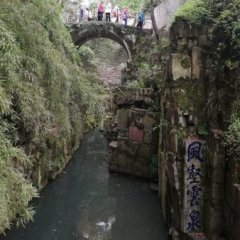
Hi Jan, sorry I'm not very good with writing long essays online! So I went back to LTL Chengde this year and had another hugely productive experience. I'll try to label some pointers here. -- Course. I studied for 2 weeks, 6 hours a day. I get decent holiday with my company so I spent 2 weeks studying and then another 2 weeks travelling and reviewing what I learnt. All in all, this is the place I progress the most. It's a genuinely hyper-charged learning experience. -- Accommodation. Homestay. Again, this is all about maximising what I can learn. I request the same homestay each time I go now, I really like them and I've started to see them more as friends. They have a daughter about 20 years old who is super sweet and we get on very well. I help her practice English every so often when she has questions and likewise she does to help my Chinese. The house consists of mother, father and daughter. -- Where we studied. There are various coffee shops and they are always quiet enough to study in relative peace. I must admit though, after 6 hours a day x 10 days, I won't be going back to a coffee shop anytime soon! -- Other stuff. The Chengde manager/coordinator is called Zhongwen (clever name given her position!) She plans activities in Chengde. I did archery and made dumplings with her family. We also wandered around the city to some nice spots she recommended. I need my me time though so I didn't go too crazy on events. I honestly love the experience and it's something I'll do every year. I spent my next two weeks in Beijing and Shenyang (where I lived way back when) for a bit of nostagia. I prefer the north you can tell! Anyway, I attach a couple of pics (scenery and study area). I don't like sharing my face online though! Hope this gives you some half decent answers. I know it's not super long, that's just me!!
4 points
-
Wow, I couldn't believe how different the spoken Chinese was in Taipei. At first it seemed easier, everyone had this nowhere accent that reminded me of a radio announcer who had achieved level III on the Mandarin test. It wasn't until I got back to the mainland and heard normal Chinese again when it hit me like a freight train. In the departure lounge at the airport waiting for my connecting flight listening to the other passengers chatter: wow, how different it was! Reminds me of the first time I went to Beijing as a CSL speaker. Supposedly Beijing is the neutral standard Chinese for all of China. I couldn't understand a dang thing. Everyone sounded indistinct, like they were like they were talking with marbles in their mouths. I was at a restaurant and I could understand the waiter just fine. I asked where he was from and he said Guizhou. Then I asked him, is it me or are Beijing people really hard to understand? He said, "yeah I can't understand them either." Which made me feel better, but didn't help me understand anyone.4 points
-
After 144 hours I finally finished 神鵰俠侶, book 2 of Jin Yong's Condor trilogy. It's pretty much more of the same, so if you somehow found book 1 too short then you should also read this one. Yang Guo is more interesting than Guo Jing and Huang Rong combined, but the plot of book 1 was better in my opinion. The first half of this book sets up all the characters and relationships but it was too convoluted for me to remember everyone, and it's also a bit repetitive ( ). The second half where everything unfolds is very fun, but also repetitive ( ). There's something about Jin Yong's writing though that keeps me entertained even if I don't fully care about what's going on at times, so overall I really enjoyed it. I read books 1 and 2 pretty much back-to-back, and I definitely need a longer break this time before starting book 3. But there was a pretty juicy cliffhanger at the end so who knows...4 points
-
As a new member, let me add on to this that my goal for 2025 was to reach a 600-word/HSK 3-ish level of reading. Although I wrote the goal down in January, it was only around August that I woke up and started to do something about it. I'm now on course to finish the HSK 3 text book and some level-appropriate reading by the end of the year. I settled on using the HSK textbooks as a gentle up ramp of increasing vocabulary and grammar points, supplemented with level-appropriate reading - most resources seem to refer to the HSK, even though I'm not planning on taking any exams. A chapter or two of theory per week, learning the vocabulary, and 2000+ characters per day of reading is a comfortable pace for now. I finished 100,000 characters of level 2/300-word reading material in September, and now I have started a plan to read 500,000 characters at level 3.4 points
-
If you're going to skip any of these steps, make it step 2. That one is the least productive by far. If you want to do more, consider doing a little learning imperfectly instead of first finding the perfect way. That's a classic version of the textbook fallacy: searching for the perfect textbook instead of just sitting down with an okay one. On the other hand, as I understand from a few recent posts I read of you and Imron, perhaps figuring out How To Learn is the thing you are actually into and have made some good progress in, so in that case, keep at it.4 points
-
Reading 成为怪物以前 by 蕭瑋萱 (aka Katniss Hsiao, because if you can pick your own name you can be a lot more timely with trendy names, so good for her). Young woman works for a company that cleans up homes where someone died in a bad way (suicide, murder, hoarding situations). Then one day she cleans up a home that turns out to have been a crime scene where the police hadn't been yet. She's unwittingly covered up a murder. Now the police suspect her and she sees no other option than to look for the real murderer herself. This could have been a quick whodunit, but Hsiao takes her time with everything in the story: why main character Yang Ning does this work, her childhood, the life story of the red herring guy who didn't do it, and lots and lots more, including all kinds of horriffic descriptions, of people who died, of horrible crimes, etc. That is not really my thing, but all in all the story is interesting enough that I keep reading. The language is not difficult. Occasionally there are scenes with some very specialised vocab, but those are rare, for the most part I think I've possibly never read a book that was so perfectly suitable for my Chinese knowledge.4 points
-
I've been in China since 2012 and throughout covid. I don't find it that much different. There are less westerners in BJ than before, but that doesn't matter to me much. They are increasingly returning too. Restaurants, bars, etc have come and gone, that happens everywhere, but maybe a bit more in China. The "brickening" where they got rid of a lot of Hutong businesses and turned them back to residential hurt the nightlife and then right after was covid. It seem like there's a little renaissance happening and there are still plenty of Hutong spots. I go to brew pubs every weekend and it's almost always 90% Chinese 10% foreigners, which I probably like more than dislike. Air quality, especially in BJ has improved dramatically, it almost feels like a different city - last winter was sunny almost every day. I think life is good here and overall better than it was 10 years ago.4 points
-
My non-AI-generated advice: You’re just going to need to develop some relationships with northerners. Get a tutor, language exchange partner, girl/boyfriend, whatever. You can try to learn about common prosody patterns, and try to find movies or shows that consistently have northern-accented speech, but there’s just no substitute for real-life exposure to and interaction with northerners. I originally learned Chinese primarily in Taiwan 25 years ago, and I have lived in southern China since then. Long after I had reached HSK6 level, I still felt way more comfortable listening to a.) “standard” Putonghua, and b.) southern-accented Putonghua. To my ear northerners’ speech sounded like Orc Talk. Then I ended up dating and marrying somebody from the far north. Her accent is really toned down after living all around for many years, but her family members have somewhat stronger accents, and my wife’s northeast accent activates when she talks with them. When I go to the north now, I still think some strangers sound like Orcs, but I can understand them pretty well. Like a lot of elements of language learning, I only overcame my northern Mandarin listening problem by building relationships with people who talk like that. You may find that in the process of learning to decipher Orc Talk, you also come to appreciate some of the stereotypical traits of northern people (loud brusqueness, relatively direct/honest, playfully-roudy drinkers, better at turning the whole family into a human dumpling assembly line, large dish portions, etc).4 points
-
The South China Morning Post is carrying a long and detailed report on the decline in foreign students studying Chinese. ‘Huge shift’: why learning Mandarin is losing its appeal in the West4 points
-
I mean I guess there could be some benefit from the word of mouth circulating about 4.0 (we don't even have the beta signup posted on our website anymore and we still get signup emails) but I'm more inclined to think it's from people studying Chinese, yeah 🙂 The gains seem to be pretty widely distributed, most countries saw about the same increase, a few had big spikes (Netherlands, Thailand, Spain) and a few actually fell (UK, Japan) - the fact that the US was right about in the middle makes me think it's probably not weak-dollar-related, but there certainly could be an economic aspect to this if people are suddenly dusting off their Chinese (or starting to self-teach Chinese) because of various global trade scramblings. Honestly, having just been back to China last November it's gotten relatively easy for foreigners to navigate again thanks to Alipay adding support for foreign credit cards; you definitely need someone to explain it to you if you don't speak Chinese, but after that you can pay like a local. There's even built-in translation support for restaurant menus, so you can customize your food court Lanzhou noodles without ever having to leave the app or interact with a human. So I'd like to think - hope? - that a second-order effect of whatever is causing this Pleco bump will be that more foreigners start seeing it as worthwhile to visit and study in China again. (for my own part I'm contemplating finally taking my kids there, COVID having hit right around the time I was originally planning to do that)4 points
-
From LTL Language School we can definitely there are fewer westerners interested in studying Mandarin today than pre COVID. The drop is quite significant. Almost all of our big competitors closed down during COVID, no new ones emerged and student numbers for LTL, even as the only real bigger Mandarin school surviving, are still down compared to 2019 in mainland China. It got better this year over last, but overall the drop is quite remarkable. Had Hutong School etc. all closed in 2019 we would not have been able to cope with demand. As it stands today we easily can. This might be different for people on scholarships who study at universities in big groups etc. but from developed countries the demand for high quality immersion Mandarin courses is nowhere near to what it was 5 years ago. Hopefully that will change, but it might be a while.....4 points
-
I’m currently on week eight of ten total studying with LTL in Taipei, and it’s been amazing. All the staff and teachers are super kind and knowledgeable, and I’ve seen so much improvement in my Chinese abilities. I’m also staying with a homestay set up through LTL, and my host family has been incredibly warm and welcoming. I would highly recommend LTL Taipei to anyone wanting to immerse themselves in Chinese. As a heads up, I’m including everything I would have liked to know ahead of time, so this is pretty wordy lol. For context for the rest of the review, I signed up for Homestay Half Board, 20 hours of small group and 10 hours of individual classes per week, the Survival Kit Standard, Connection Kit, and the Safari upgrade. When I came to Taiwan, I was at a high A1/low A2 level, but my speaking and listening was pretty weak. Classes I have morning group classes from 9-1, a lunch break from 1-2, and then one on one class from 2-4 on Mondays and Wednesdays and 2-5 on Tuesdays and Thursdays (my teacher and I both enjoy having Friday afternoons off). I had about three weeks of morning group classes, but then my classmate left and I switched to the same amount of time but individual classes. I’ve had the same afternoon teacher (Anqi Zhang) for my entire time here. Since my morning group classes go through a standard textbook (more on that later), she focuses our classes on practical Chinese, like ordering at a restaurant, getting directions, and talking about hobbies and preferences. LTL has a variety of supplemental textbooks that she pulls the lessons from, and we also sometimes just talk about our days/life in America vs Taiwan to practice listening and speaking (my weakest areas). With the Safari upgrade, on Tuesdays and Thursdays (when we have three hour afternoon classes), Anqi takes me around the city to various interesting places. She asked at the beginning if there were any places I wanted to go, and I didn’t have anything in mind but told her I enjoy museums, so we went to both famous places (such as the Palace Museum and the Taipei Zoo) and lesser known (at least in my opinion) but very interesting places like the National Human Rights Museum and the Beitou Hot Spring Museum. I’d expected to need to do a lot more speaking in Chinese, but most museums actually have displays in both Chinese and English, so I practiced less than I’d expected but also learned a lot more than I could have understood from the Chinese displays alone. Though it wasn’t totally what I was expecting, I would still sign up for it knowing what I know now, since I’ve gotten to go to a lot of places I never would have known about (and Anqi helped provide context or answer questions that I had!). For the first three weeks of classes, I had morning group classes. I had one classmate for that time; briefly another classmate joined us, but on the first day he realized he was at a different level than our class, and LTL moved him to a more suitable class. We use the textbook series A Course In Contemporary Chinese; when I started the class was in level 2-2. I think it’s a great textbook; it has a lot of vocabulary and helpful grammar that I use in everyday life. It also has readings and a workbook with listening and extra grammar practice. LTL provides the textbooks, so I have my own copies of the textbooks that I can write on and will take home with me. For textbook levels 1 and 2, the textbooks don’t come with workbooks, so the teachers make copies of the workbook pages so we can do those exercises. (I’m currently in textbook 3-1, and this level came with its own workbook). After my classmate left Taiwan, I by chance had individual classes for a week and then decided to switch to full individual classes because I saw a big difference in my rate of improvement. The group classes were definitely helpful and worthwhile, but I do prefer the individual classes While group classes had to stick more or less to the textbook (though we definitely were still able to go off on tangents and talk with the teacher about our days), we’ve been able to pull in lessons from other textbooks on topics I’m interested in, spend our time discussing the news and learning relatively specialized vocabulary like basic math words (since I’m a math major), and adjust lessons to focus on my weaknesses (for example, rather than me reading the textbook’s reading selections, one of my teachers would read the text to me while I had my book closed so I could practice my listening more). Group classes were still great, but if possible I would recommend going with the individual classes for the fastest rate of improvement. Typically, each class has one or two teachers throughout the week. For my first week here, I had one teacher Monday-Wednesday-Friday and another Tuesday-Thursday. My one complaint with classes is that for various reasons, I’ve had several different teachers throughout my time here (probably at least five, though I don’t have a great memory). I think this was partly due to me coming in the summer, which is the busiest time for LTL since they also have a summer camp running, and partly due to things like teachers going on vacation or taking time off for other reasons. Though this wasn’t ideal, the teachers have great communication so I didn’t have to spend time getting them up to speed and kept progressing. I also enjoyed getting to experience the teachers’ different styles - some focus more on going through the textbook, which I enjoy making progress on, while others spend most of the time engaging me in discussions that help my speaking and pronunciation improve. The past few weeks, I have had a consistent few teachers (Alice, Sissi, and Avery), and they’re all very excited to teach and good at being encouraging while correcting my mistakes. All of my teachers have also been willing to give me honest feedback on my progress when I asked. Various teachers organize cultural activities maybe once a week or so; I haven’t gone to many because I was tired from class, but the ones I’ve gone to (including learning how to play mahjong and how to wrap and then cook dumplings) have been really interesting and well-organized. Ones I haven’t gone to include laser tag and karaoke. The academic manager, Alin, and the cultural specialist, Riona, have also been amazing. While I interact with my teachers more, they’re always a friendly face between classes, and they’re happy to help when I’m not sure which classroom I’m in or if I need anything. Because I have the survival kit, the school booked a driver to pick me up from the airport when I arrived. My flight had been delayed so there were some issues with me finding the driver, but even though it was a Sunday, Riona was available over Line (the communication app of choice in Taiwan) to help me figure it out. Riona also organizes lunches a few times a week for the adult students to go to if we choose, so I’ve gotten to try a bunch of different restaurants within walking distance of the school. Alin was very helpful when I mentioned trying to switch into entirely individual classes, even though I wasn’t sure if it would work out since I was already here when I asked to switch. Homestay I cannot say enough good things about my host family. They immediately welcomed me and are always willing to help me with anything or practice Chinese with me. When I first arrived, my host mom showed me to the bathroom (I was sick from my flight and needed to shower). She then took me out to breakfast, showed me around the neighborhood (including the MRT, Taipei’s subway system, which I use to commute to classes), and helped me buy an EasyCard and withdraw some cash from an ATM. On my first day of classes, she went with me to the MRT station, helped me purchase a monthly unlimited pass, and pointed out the route to school. My room is very nice, with plenty of storage, a desk and full-sized fridge, a TV, an AC unit, and a strong fan. I have a key to the house and a key to my room, though I’ve never felt the need to lock my room. The house has a washing machine (my host mom insists on doing my laundry for me, which is very sweet of her), and she hangs the clothes on a rack in my room to air dry. Though I brought an adapter (since I read most outlets have two prongs but my computer charger has three prongs), my host mom already had an adapter/extension cord that she plugged in for me. I also use their WiFi mostly without issues (it has gone out a couple times), including for video calls with friends in America. For the half board, my host family provides breakfast and dinner. They have provided lots of different things so I’ve been able to try various Taiwanese foods, and they’re very observant of what I like and don’t like. My host mom also very quickly realized that I enjoy fruit and now provides fruit for me after dinner every night. Although my host mom works six days a week, she often takes me out to local markets or parks on her day off. I really enjoy both seeing parts of local life that I wouldn’t have known to go see and getting to spend time with her. I plan to stay in touch with them after I leave Taiwan.4 points
-
Lin Yutang's MingKwai 明快打字机 was the first Chinese typewriter. Only a single prototype was ever made and it was long thought lost. Then it suddenly reappeared this year, and has just been acquired by Stanford. https://madeinchinajournal.com/2025/05/02/lost-and-found-the-unexpected-journey-of-the-mingkwai-typewriter/4 points
-
I recommend you stay at home and do your homework.4 points
-
I have read 人生海海! It's already been a few years ago. I seem to remember that it was an easy to read book, and the story was interesting enough. I can't remember much of it, but I have a positive impression of the book overall. Several books before that, I had read 解密, by the same author, and suffered horribly through it, because it was only my 7th book, and I wasn't quite ready for it. I might actually re-read it, now that I'm more experienced. I am currently reading the whole 7-book Harry Potter series in Chinese, through WeChat Books (the purchase was a bit pricey, but still a lot cheaper than buying them on the US market). I admit that reading it all in English is greatly preferable (because that's the language it was originally written in!), but with my limited time, I find that this is a good way to keep my Chinese skills fresh and familiarize myself with popular western books at the same time. When the Harry Potter series started to explode in popularity, I was maybe in middle school or early high school, and I thought "little kid books" were beneath me. Plus, I was ill-disciplined and just didn't read much in general. So beyond the first two books, I completely missed out. It all just didn't appeal to me. There's a bit of English idiom that gets lost in translation, and (as the WeChat community comments are eager to point out) there are occasional translation errors. Otherwise, the experience has been quite fun--the guilty pleasure I was hoping for. The characters are vivid, the plot is fast-moving and interesting enough, and it's full of deadpan, absurdist humor. That last fact really surprises me. I just find it really funny. Maybe when I was younger, the humor went over my head. But now I appreciate it. So when my fellow Americans ask me if I've read Harry Potter, I can answer, "Well...yes. In Chinese."4 points
-
I think (hope?) most of those page views are old - we started blocking bots after that outage a few months ago, because they were eating up inordinate amounts of system resources and making outages like that more likely. Checking our statistics now, the traffic has been pretty steady since then, so it seems like those efforts are still succeeding. Unfortunately, there doesn't seem to be a way to remove those erroneous extra views from existing posts, because we don't keep log data with enough detail to figure out which views can be attributed to which bot.4 points
-
abcdefg, Thank you very much, I appreciate your kind remarks. But by commenting on my long forgotten adventure, you've given me an opportunity I never expected to have to thank you for so much that I and everyone else who reads your advice have gotten from you over the long years you've participated here. From cooking to personal interactions with all sorts of Chinese people we all hope to befriend, you are the go-to-guy for real personal experience in and about China. TBZ Note: I've actually erased about 350 words of babbling text because it sounded too much like fan-boy fawning, but I've always wanted to thank you. So... Thank you... very, very much...4 points
-
So we did end up going to Wutaishan. We spent 4 days in Beijing, I drove us to WTS where we spent 2 nights, then we drove to a section of wild great wall in the countryside outside bj. We stayed at a guesthouse overnight and hiked the GW in the morning. We drove back to bj and had another day and a half. WTS was a good choice, as my friend really enjoyed the drive, about 5.5 hours including stops to eat etc. He got to see some "real china", the highways and other infrastructure and some interactions with people on the way. The scenery was quite nice and the weather was good, we took different routes there and back which had surprisingly different scenery - the way there was farms and the way back was craggy mountains. He was very impressed by the highways and bridges. As @Jim mentioned, getting the car in to WTS was some mafan. My wife had to reserve the parking as there was no place to insert a passport number. We also had to sweet talk them a bit at the entrance. My Chinese skills came in very handy. The next morning, where to start hiking wasn't very well signposted either, but again, Chinese helped and we got there. We ended up not staying overnight at a monestary, but rather back at the guesthouse, as we didn't have the time for a full 2 day loop. Anyway, we had a full day hike with great weather. Next day we checked out some of the temples in the valley. Great wall hike was phenomenal weather and all around excellent. We also had a great time in bj both before and after WTS. My friend, although we'll traveled in Asia (having lived in Vietnam and Japan in the past) was VERY impressed with China. More than I expected him to be. I had a great time showing him around and almost everything went smoothly. We had a fun filled catch up!3 points
-
https://www.youtube.com/@wangzhian A very advanced podcast, social issues and controversies, scandals, etc., a male host3 points
-
couldn't resist pointing out the current exception to this, it being 乙巳年 this year!3 points
-
Would be great if users were able to select the difficulty level by CEFR, HSK or TOCFL level. Also, would be cool if segmentation was done on the article, and then the words compared to the HSK/TOCFL word lists to show the breakdown of words by level, e.g., 20% words are HSK 1, 10% words are HSK 2, 30% words are HSK 3, etc.3 points
-
Yes. In the 1990’s, not uncommon for HK origin Cantonese speakers to say this to reflect what I felt was some sense of “uniqueness” (some might say “snobbishness”). On the other hand, I haven’t heard this in HK for at least over two decades. Once you start doing business with 普通話 speakers, such comments/attitudes don’t really help in developing 關係 and trades. In Malaysia, mandarin speakers use the word 華語 to describe speaking mandarin. If it helps, 普通 also translates as “common”, so it’s the common language. (Not the language of commoners). Canada was a land of immigration and acceptance so perhaps it is time to move with the times and consign such dated thoughts into history.3 points
-
A note for clarity — Hawkes did not use a single published version of 紅樓夢. Rather, he combined bits and pieces from different versions, including the circulating handwritten copies. Professor Fan Shengyu commented on this in his book The Translator's Mirror for the Romantic. In fact, when he put together the bilingual edition back in 2014 or so, Fan Shengyu had to construct a sort of Frankenstein text out of just about every possible original edition to match what Hawkes was doing. I've been engaged in a retranslation of 紅樓夢 (specifically the 1792 程乙本) of my own that you can check out here, if you're interested. In general, I've found that Hawkes overtranslated the Chinese text, inserting interpretive interpolations in the text itself. It's also really frustrating because Hawkes neglected to use footnotes, ostensibly because his translation was intended for "general readers." However, Hawkes occasionally did not translate basic Chinese terms into English (translating the common phrase "小丑" as "the chou in a comedy" in the first chapter, for example), and sometimes veered into using Sanskrit terms, Latin names, and French and Italian phrases. He even decided to translate passages from the Confucian classics into Latin, which can be extremely off putting for modern readers. The Yang translation has numerous issues as well — most notably the insertion of Marxist interpretations into the text itself. The Yangs are much more likely than Hawkes to skip a sentence or two for some reason or other. However, I consider Hawkes to have committed the unpardonable sin by removing the entire first paragraph from the proper text, sticking part of it in the introduction instead. Critically, neither translator bothered to deal with the final sentence of the first paragraph, "更於篇中間用「夢」「幻」等字,卻是此書本旨,兼寓提醒閱者之意," which literally means "as far as terms such as 'dream' and 'illusion,' those words reflect the main theme of the book, and serve as a reminder to my readers." This is frustrating to no end, since the common repetition of characters like 幻 is a major part of Cao Xueqin's subtle message. For example, in the name 警幻仙子 (the Goddess who Dispels Illusion), which both translators call "Disenchantment," or in the faux-heaven that she lives and works in, 太虛幻境 (the "Illusory Realm of the Great Void), the character 幻 indicates something that is not real (i.e. 假 and not 真). It's a subtle criticism of the orthodox Buddhism and Taoism of Cao Xueqin's time: heaven turns into just another extension of government bureaucracy, the people who dwell there don't actually have answers and are more concerned with getting their job done than with actually helping anybody, and so on. You see 幻 pop up everywhere when you start noticing it. When the Taoist Master Kong Kong reads the story early in the first chapter, he reads about how the stone "無才補天,幻形入世,被那茫茫大士渺渺真人攜入紅塵," or "was unfit to mend the heavens, took on physical form, and eventually was taken through the mortal world and into enlightenment by the Vast Master and the Ethereal Sage." Here, though, the stone doesn't just "take on physical form," but 幻形入世 — it took on a kind of "illusory" physical form, or the "illusion" of a physical form. I don't know how to translate it, but it's still there. And Cao Xueqin literally tells us that it's the purpose of the book — and yet Hawkes and the Yangs both decided to ignore it. Every English translation of this book will have problems. However, the editorial decisions that both Hawkes and the Yangs made frustrate me to no end, especially as I dive into the original text and see what's really there. And Hawkes in particular seems far more interested in turning 紅樓夢 into 19th century British literature than in actually engaging with the point Cao Xueqin was making. Anyway, there's my two cents on the subject. I think you could get lost for years in just trying to reverse engineer the editorial textual decisions that Hawkes made and trying to figure out why.3 points
-
巳 isn't 已 拂 isn't 彿 isn't 佛 吏 isn't 使/史 栗 isn't 票 殊 isn't pronounced like 朱 簿 isn't like 博,溥,薄,傅 (seriously, 3 #&$@ing pronunciations for one "phonemic component"!?) I just nabbed these from an online story I'm reading. 肖 characters are even worse: 趙,俏,屑,稍,消3 points
-
I have lists and lists of these! here's the one running on my phone from the last year or so: 稱 cheng1 to call, name cheng1 to weigh (cheng4 scales is now written 秤) chen4 to fit, match, suit 缝 feng4 n. a crack, seam feng2 v. to stitch, sew up 击 ji1 to hit ji2 to strike in 击鼔 (today ji1 is still pron ji2 also in TW) 匙 shi4 in 钥匙 chi2 when MW for scoops 切 qie4 to closely stick to, cling to, press up against qie1 to cut 蛇 she2 snake yi2 winding, meandering, serpentine 虚与委蛇 勒 le4 n. bridle, halter, v. to rein in lei1 v. to force, coerce 正 zheng4 exactly zheng1 first month of the year (正月) 绿 lv4 green lu4 in 绿林好汉 量 liang4 a measure liang2 to measure the rules around this characters pronunciation are inconsistent and arbitrary - eg. native speakers will read liang2 for 不自量力, 石 shi2 stone dan4 a measure of weight 嚼 jiao2 chew (used on its own) jue2 chew (used in compounds) 菌 jun1 bacteria (microbiology) / fungus (botany) jun4 fungus (culinary) 虹 hong2 rainbow (from phonetic 工) jiang4 rainbow (coll.) (also from phonetic 工 which turns up as the 匚 in 匠) 夾 jia1/jia2 to pinch, clip, clamp jia1 a clip 号 hao4 a number hao2 to howl (voice/wind)3 points
-
I read that book, but apparently I forgot more than I thought. Who was 许友 again? 《九歌 一零五年 小說選》, 九歌 being the publishing house. ISBN 978-986-450-118-2. I finished the last story today. It was a good choice of book, with stories that were all good and all very different: new, more old-fashioned, more Taiwan-flavoured or more of other countries. Some I liked better than others (of course). I think my favourite was 练习 by 钟旻瑞. Young man starts to realise that whatever he draws, his roommate stops doing. First roommate quits smoking, but it only escalates from there. I also really liked 人們說石頭早上就在那裏 by 張台澤 (a large stone appears above a city and stays there in mid-air) and 善後 by 章緣 (two sisters, one functional, the other barely; the functional one takes care of mother when mother gets dementia, but more happens). I have another short story collection from the same year, but I think my next book is a graphic novel (which is downstairs right now, but I'll report it here at some later point).3 points